Wednesday, 4 July 2012

Challenge Number Seven – Eat lobster


One marvellous discovery about Jersey was that seafood is incredibly cheap there. It’s just normal to have shellfish on a restaurant menu at affordable prices. After a delicious crab sandwich in Durrell and scallops in a cafe overlooking St Brelade’s Bay, I realised that this was going to have to be my week to eat lobster.

I’ve been slow to come to molluscs. A bad experience with crab at a wedding buffet when I was 14 convinced me I was allergic, and I’ve always taken seriously Anthony Bourdain’s advice in Kitchen Confidential to avoid the fish special in restaurants on a Monday and mussels at all other times. One of my uncles went into anaphylactic shock after eating shellfish, which further led me to err on the side of caution. But slowly, once I started being able to afford to eat in better places, curiosity got the better of me and I started to try seafood out, realising what I had been missing. I now have a passion for scallops and prawns. A langoustine at Tom Kitchin’s restaurant in Leith was part of the best meal of my life. However, I still don’t do mussels or clams. Or whelks or cockles. And I’d never tried lobster. It’s a hangover from my days of paranoia – it’s always so expensive and so I was scared of spending a small fortune on something I didn’t like or which might cause an allergic reaction. But nearing 40 and remembering that langoustine, it just had to be done.

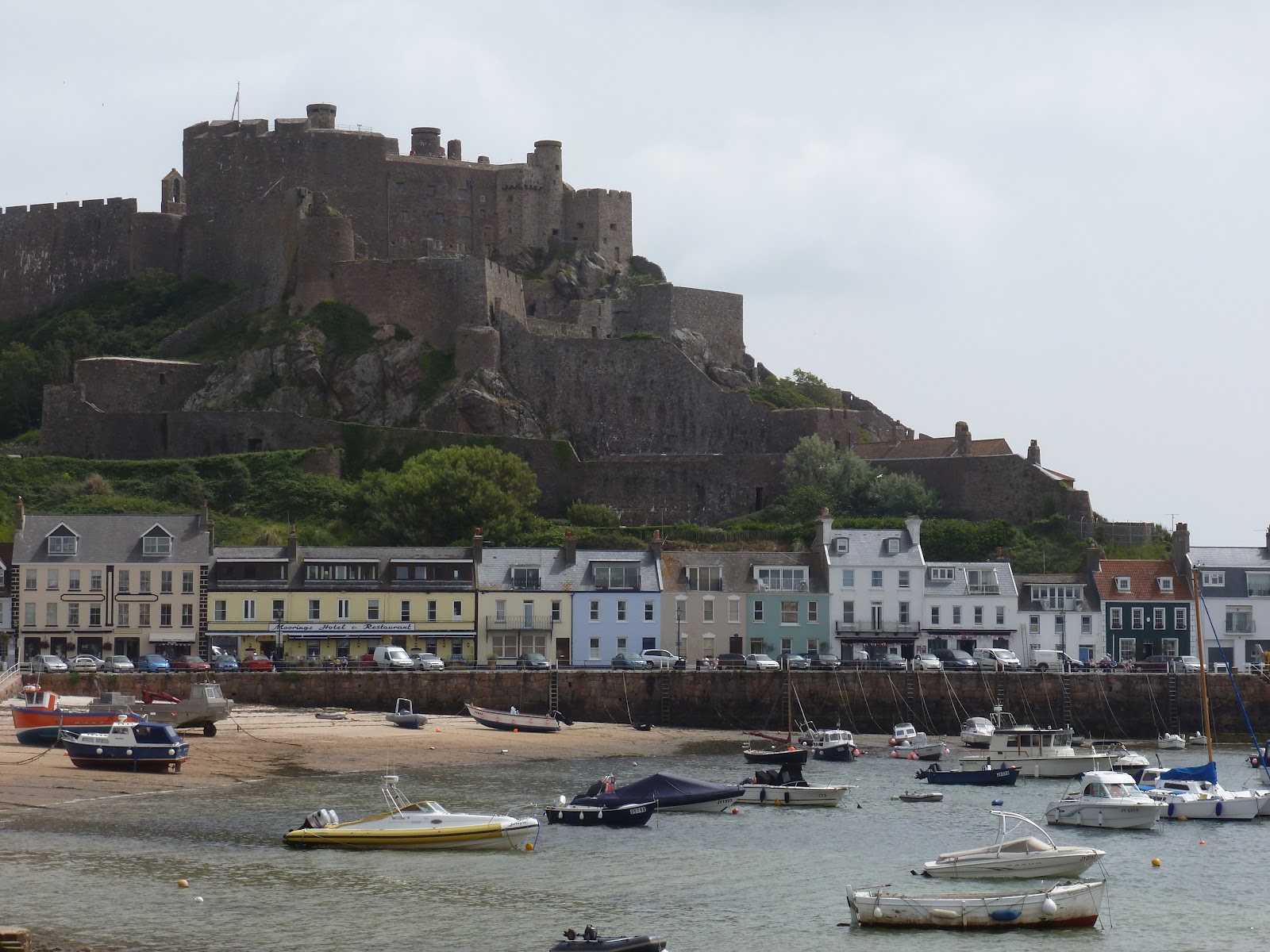
In Gorey, in the shadow of Mont Orgueil, there’s a restaurant on the main road called the Bass and Lobster Food House, which seemed a fitting title for my first taste of lobster. First we had to check that they’d let us in with Charlotte, and had suitable food and a high chair for her, which they thankfully did. (Pasta in tomato sauce – always a winner with our Charlotte. And this was actually made fresh for her. In fact, in my forthcoming book “Nice Places To Eat With Kids”, the Bass and Lobster will get 10/10 for customer service and attitude to little ones, since they treated us as politely and respectfully as an apparently eminent local politician sat at the next table.) Thus we relaxed and settled down to their lunchtime set menu – a snip at £13.95 for three courses of fabulous fine dining. And lobster thermidor as one of the mains (sandwiched between a starter of blue cheese and wild mushroom risotto balls with pumpkin puree, and a white chocolate and orange cheesecake and blood orange granita for dessert) Mm-mm. It was delicious. But there wasn’t enough of it. I’ll be having lobster again whenever I can. But I’ll maybe ditch the cheese sauce next time.


Challenge Number 26 – Visit an island


It could have been a Canary. It could have been a Balearic. It could have been a Caribbean. It could have been one in the middle of a lake only accessible by rowing boat. It could have been a bit of a cheat since we live on an island in the first place. But it ended up being Jersey.

Actually, it couldn’t have been any of the first three since we decreed that we weren’t prepared to spend more than an hour on a plane with a wriggling, writhing, wrestling oversized toddler on our laps. And once she turns two and we have to pay full fare for her to have her own seat, we’ll be too poor to fly anywhere.

So Jersey it was. I’ve always wanted to go, ever since I used to watch Bergerac on Saturday nights in the 1980s with my mum. It’s the only island in the world that actually turns into John Nettles’ face when tipped on its side. True fact.

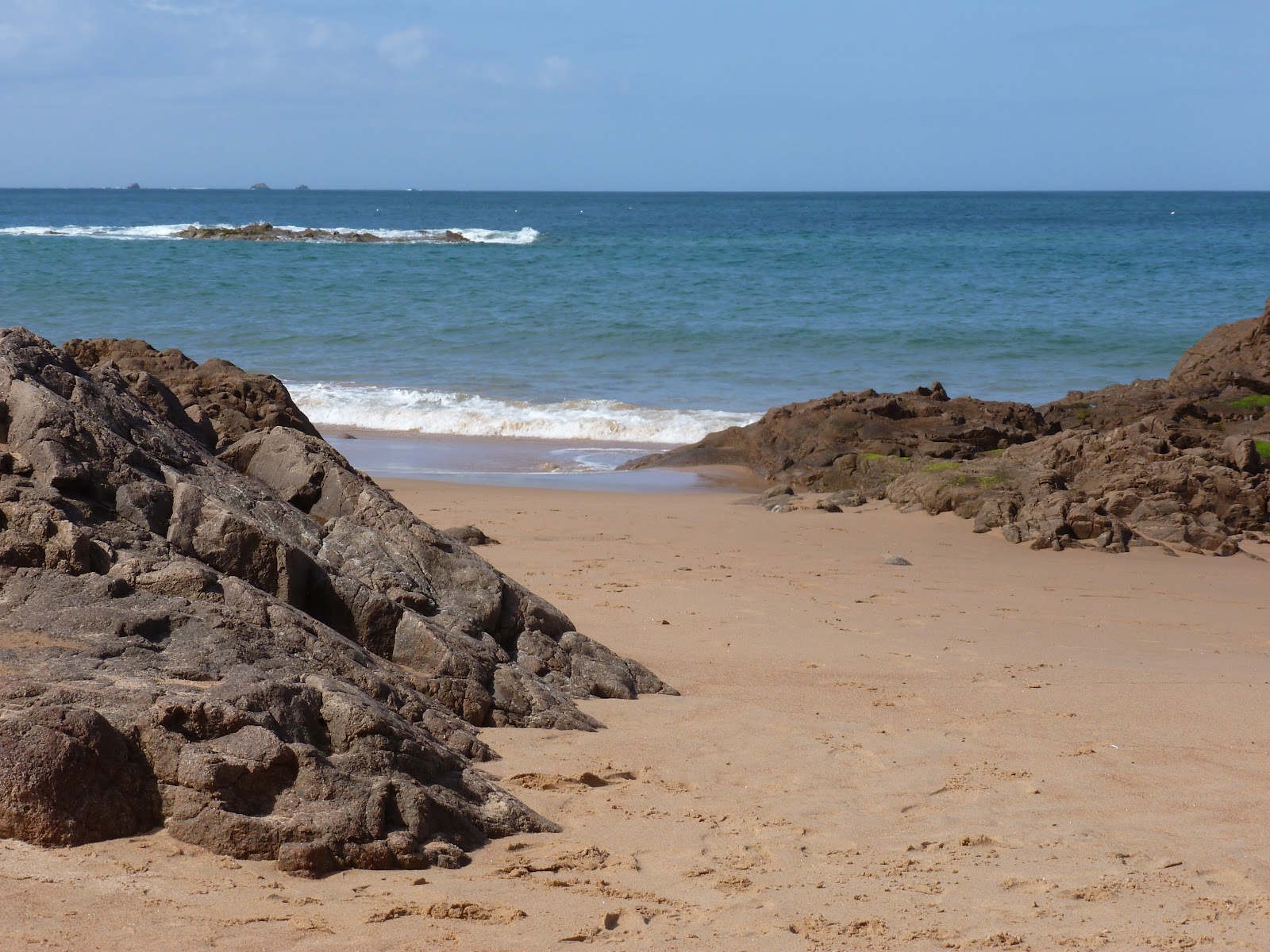
But Jersey was a wonderful holiday choice. It really is the most beautiful island. It has beaches to rival any of the world’s best, from sheltered coves, steep cliffs and vast expanses of sand perfect for castles, some of which are actually overlooked by real castles. It has a spacious sense of light, narrow country lanes framed by green foliage, rustic French-style architecture and its own vineyard. It has Waitrose.

Normally, Jersey has good weather. I wouldn’t say that it did the week we were there, but frankly anything short of a blizzard or tornado would have been a vast improvement to what we had left in Yorkshire’s crap summer of 2012. We had sunshine at some point on most days, and only one morning of torrential rain. And with a little one in tow, sunbathing’s not really an option any more anyway.

Jersey also has German bunkers. Everywhere. Now, these aren’t pretty, but are an important part of the island’s history since the Channel Islands were the only British soil occupied by the Nazis in the Second World War. Hitler decided that Jersey had to become an impenetrable fortress that he wouldn’t have to hand back so bunkers and concrete walls were built all round the coast. One of the bunkers houses a small military museum telling the story of the Occupation. This is done to greater show and fuss in the Jersey War Tunnels in the centre of the island, but this tiny bunker had a far greater effect on me than all the sound effects, idiot-proof explanations and video diary gimmicks of the tunnels. It was just jam-packed with Nazi memorabilia: newspapers, crockery, uniforms, guns, flags. Even an Enigma machine. You just never see this anywhere else. For obvious reasons, Germans don’t put it on show, and in most places where the Nazis invaded, anything they left behind was destroyed by those who had suffered under their rule. It is in fact telling of itself that all this stuff survives in Jersey today: its native citizens, through collaboration, luck and a general holiday atmosphere about the place, got off relatively lightly. British people who stayed behind, members of the resistance movement, Jewish people and slave labour imported from the East didn’t, of course. What hit me was the fact that all the stuff on display was (for want of a better word) real. We’ve all seen bad and better war films, photos, reconstructions in documentaries. But I’d never seen a genuine swastika that was actually on display during the 1940s before. (Not that I’d had a desperate desire to do so, I hasten to add.) There were also footprints in the concrete on the floor made by jackboots of German soldiers going about their daily business. And it all sent a creepy shiver down my spine.

Jersey also has Durrell, named after its founder Gerald, which has shaped how zoos today look all over the world. Durrell focuses on rescuing and breeding endangered species – orang-utans, fruit bats, gorillas, chicken frogs, lemurs. They are all about as free to roam as you can get whilst still living in an enclosed space. It’s a wonderful place.

Jersey is covered with beautiful coastal flowers at this time of year. There are many gardens to visit, and we called in at one belonging to Reg. Reg’s Garden was very pleasant, yet with serious touches of the surreal on its borders. There was a nice koi carp pond and waterfall, some caged birds and colourful flowerbeds. But then there was a mini amphitheatre, which every year pays host to “Regstock”, Reg’s own music festival. And then there was the fairy grotto, which had miniature cottages and glass angels on trellises. And a greenhouse absolutely stuffed full of Barbie dolls dressed as fairies. Ee-gads. It was time to go.

We stayed in a self-catering holiday park called Les Ormes. Accommodation is stupidly expensive on Jersey and this was all that was left and all that we could vaguely afford by the time we got round to booking. We were slightly concerned that a map clearly showed that it was situated right beside the airport runway, but actually it was fine. Besides, for a toddler “plane-in-sky”s are quite a novelty, and there were no night flights. And it’s not like any Jumbos fly into Jersey. Plus our lodge had its own hot tub, which sorted our evening entertainment and would make me forgive anything.

Oh, and Dave saw Jim Bergerac’s vintage car on display in a park that he took Charlotte to while I went round the War Tunnels. Of this I was very jealous.


Thursday, 21 June 2012

Challenge Number Five: Grow Something New (continued)


Look, my bean plant has beans growing on it! Broad beans, it turns out.


And I planted a load of tomato and cucumber seeds that my father-in-law had going spare. Some of them have turned into plants, which are now outside in our back yard getting rained on. The snails have made a beeline for the cucumbers though and I don’t think a single one has survived. (Of the cucumbers, not snails. There are still plenty of snails.)


I’m hopeful for at least a small crop of cherry tomatoes though.

And look, here’s a loaf of bread that wasn’t made in a breadmaker. (Loaf number 12.) Banana and chocolate bread. It’s called bread. It was made in a loaf tin. My book group enjoyed it. I think it counts.


Wednesday, 20 June 2012

Challenge Number 38 (Part Two) – Take Charlotte to see The Queen And/Or Olympic Torch


This was York’s moment to shine, according to all the banners hanging all over town. Conveniently, the Olympic Torch was going to be carried right past the end of our street. Rather less conveniently (it transpired when the schedule was announced), it was due to arrive at Charlotte’s bath and bedtime. Charlotte likes change about as much as her mummy, but there was no way I was going to let us fail at this challenge just because toddlers are sticklers for routines.

But just in case things didn’t work out, I took Charlotte along to all the Olympic themed activities happening on the Knavesmire during the day. In the morning, school children had made giant puppets to race in an oversized sports day. In the afternoon, various local sporting clubs had set up stalls and opportunities for kids to try out various activities – a climbing wall, riding on a trotting plastic horse (a bucking bronco wouldn’t have gone amiss, surely?), a tiny tennis court, a sheet with holes to lob rugby balls through and, er, bowls. Then there was a lot of over-commercialised tat from the official Games sponsors, whose names I won’t advertise here. The only highlight for me was seeing the horse, Paddy, who was going to be tasked with carrying the Torch on its last stretch and would cause a major upset by being so unsettled that he made his rider, Harvey Smith, drop the torch. (A true bucking bronco!) Paddy was walked out for a rehearsal and was already showing temperamental flare and white eyes as it stomped round and reared near the stage.


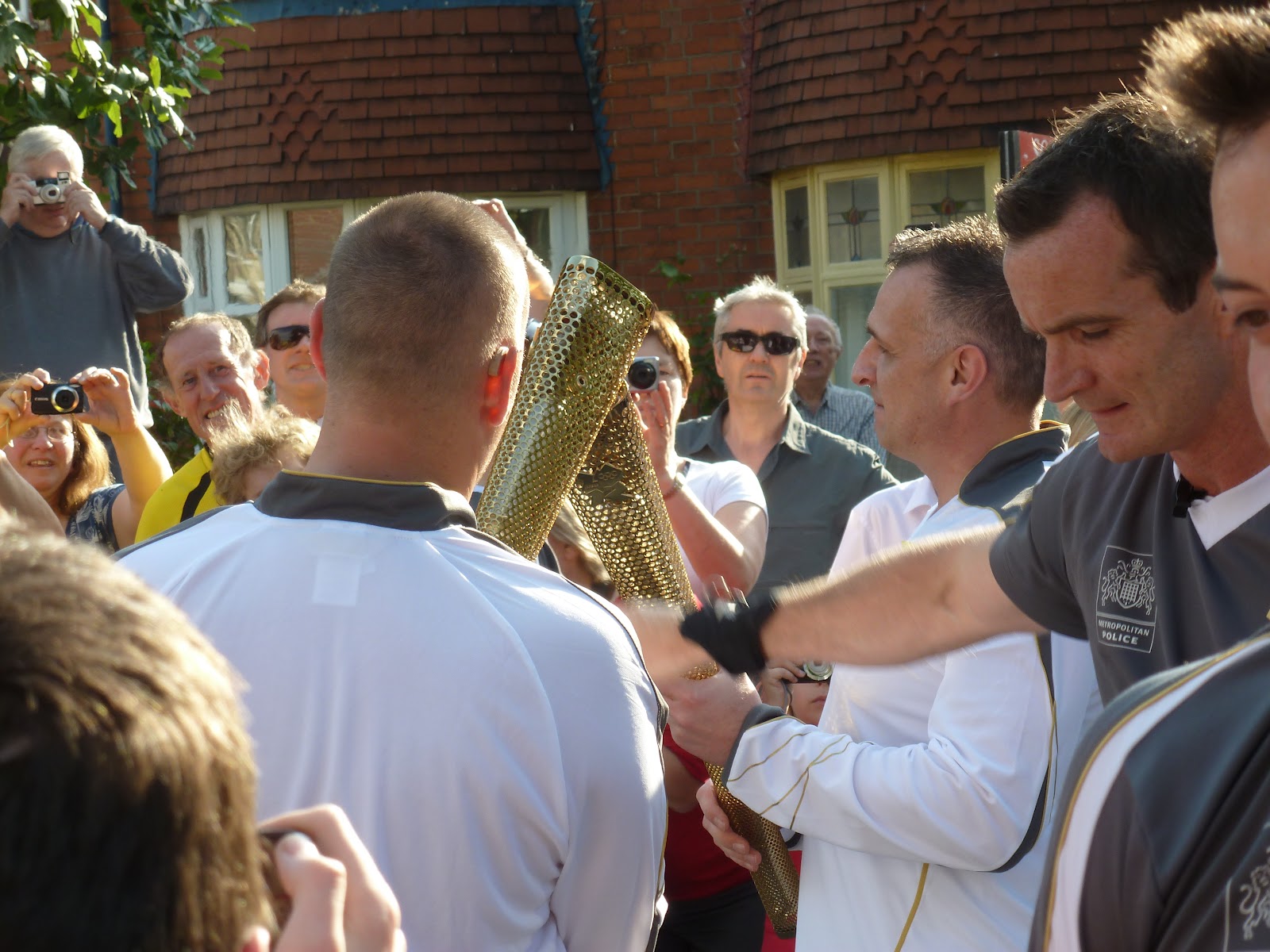
In the end, all it took to get Charlotte out the house in time to see the Flame was having tea half an hour earlier. Once Charlotte saw all the helicopters hovering overhead it didn’t even seem to occur to her that she was missing In The Night Garden. And just like when the Queen came to York, it was a sunny day, there was a lovely atmosphere and we very easily found a spot with an excellent view. And brilliantly, a torch handover was going to happen right at the end of our street where we were stood. Before long, the torchbearer taking over at the spot was dropped off at the bus stop by the Torch Relay Special Service. He was an amazing guy who despite having terminal brain cancer has raised thousands of pounds for children suffering from brain tumours by going on sponsored cycle rides (literally) the length and breadth of the country. His friends and family were out in force to support him and he seemed quite overwhelmed by the occasion but was kind enough to let Charlotte and me muscle in on a photo.

Then came lots of police motorcycles, two naff floats from our sponsors playing pumping dance music (the less of which said the better), then a lorry (the mother flame?), before at last, one torchbearer, flanked by runners, ready to hand over to another. It really was quite magical and uplifting to see it all happen in front of us. Everyone cheered, people had garden parties, and I felt inspired enough to make Dave take Charlotte in for her bath (challenge done – she’d seen the Olympic flame) and follow the crowds up to the Knavesmire.
Here came the perfect end, purely by chance. I went in via the posh entrance to the racecourse grandstand that I’m normally not allowed anywhere near, and arrived just in time to see Harvey Smith astride his now much calmed horse complete his stretch along the straight. He then dismounted and headed up on to the stage to light the giant cauldron. An excellent telephoto lens on our camera makes it seem that I was very much in on the action. I wasn’t. I’d seemingly missed the concert’s advertised highlight of some pop star I’d never heard of (I’m old, I don’t care) but the other purported celebrity was still there, an ex-Blue Peter presenter who wasn’t Peter Duncan, Janet Ellis or Simon Groom. (Like I said, I'm old.) But I did recognise that woman from Look North with the very deep voice who presents the sport. Oh, yes. Just like I saw Christa outside the Yorkshire Museum on the day the Queen came to visit. And Harry Gration in my doctor’s surgery once.


Lots of cheering followed the lighting of the cauldron, then once the university gospel choir started singing, the crowds flocked away in droves, so I was able to get nice and close to the stage to take one last photo.


So the Olympics made all of us in York have a great day. I’m not sure they’ll do the same for my friends living in London in August.

Sunday, 10 June 2012

Some more bread

I have managed six more contributions towards Challenge Number 34 (Bake 40 loaves of bread in a year):

Loaf six was a wholemeal rapid bake made for visiting in-laws, still so warm and fresh when we came to eat it that it instantly collapsed on slicing.

Loaf seven was a rapid bake white loaf, made for a soupy lunch which Charlotte enjoyed more than the photo below implies.


Loaf eight was intended to be spelt, sunflower seed and honey, a foray at last into more unusual breads. However, spelt loaves require the use of the rye blade in our breadmaker and it had been that many years since I last used it that the blade had completely vanished from our kitchen. I've become very good at accidentally throwing things away since getting pregnant. A rummage through several drawers and cupboards just resulted in a lot of strewn around freezer bags and spilled flour, and no blade. So once again, we had to make do with a rapid bake wholemeal loaf. 


Loaf nine was finally something a little more ambitious - an Italian style parmesan, olive and thyme bread made for a pasta lunch with Marsh and Sam and their children. I left this one to bake overnight on a timer setting. It was (though I say so myself) delicious.

Loaf ten was a normal speed bake multi-seed wholemeal loaf made for breakfast with two of my mother's university friends who were staying with us for a couple of days. A stressful visit since Charlotte went down with flu the moment they walked in through our front door and she then proceeded to not eat or sleep for the next 48 hours. All very fraught. But the bread was good, smeared with my dad's homemade marmalade.

Loaf eleven was a straightforward wholemeal loaf. It actually contained too much yeast as I had intended to do a rapid white loaf bake, which takes two hours. I was baking in the evening, intending the loaf to be ready around 10pm. However, I didn't have enough white flour so had to make a mixed white and wholemeal loaf, but the rapid bake wholemeal setting takes three hours, and I no longer have the energy to stay up until 11pm, so had to make the wholemeal loaf on the overnight timer instead. I had already added the yeast to the pot before I realised how little white flour was left in the bag. (A rapid bake requires a quarter of a teaspoon more yeast, you see... Hello? Are you still there? Come on, I'm nearly done, I promise.) However, the loaf seemed no more risen than usual, and it's always wonderful to get up to the smell of freshly baked bread.

Right, all for now. The rye blade never did turn up - I just ordered a replacement from Amazon.

Wednesday, 6 June 2012

Challenge Number 28: Bathe in a natural body of water


My grandfather in Grasmere, Colin Dodgson, was many things. Mumbler, skinflint and scruff might be the first words that spring to mind. He usually had his trousers held up with battered braces and a roll of string. He was also the creator of such village scandal that he was evicted from the church choir.

On a kinder note, for years he ran the Grasmere Tea Gardens by the river Rothay, and at one point owned two of the adjacent shops as well, selling scones, gifts and hiking boots long before the village became full of similar establishments. He kept the hiking boot shop until he was in his seventies. In the 1960s, he built his own house, brick by brick, halfway up a mountain. The house had incredible views across the vale of Grasmere, with a steep sloping woodland garden full of azaleas and a pond fed by an icy mountain stream that he swam in without fail every Christmas morning.

He loved classical music and opera, playing them at ever increasing volume as his hearing faded over the years. He loved Glyndebourne and owned a baby grand piano, though he couldn’t play a note on it.

Partially blind in one eye, he was exempt from normal soldier duties and spent World War Two as a radar operator in the Home Guard in Norfolk.

He drove a Volvo, which is perhaps just as well as his driving was terrible. He was once stopped and breathalysed by the police on New Year’s Eve on suspicion of being drunk at the wheel, as he’d been veering all over the road. The irony being that Grandad was pretty much teetotal.

However, what he would most like to be remembered for are two great physical feats. He was the first person in the whole world to climb all the mountains in England, Scotland and Wales that are over 2,000 feet high. In his youth, he dragged my grandmother with him, and they rode between the fells on a tandem. My grandmother always described being stuck on the ridge of Aonach Eagach with him in a storm as one of the worst experiences of her life. In later years, he was a more solitary walker, sleeping at night in the back of his trusty Volvo. Most of his walking was done in winter, as back then Grasmere had a strictly seasonal tourist trade, and he could shut up shop between November and March.

My grandfather’s second great physical feat was tarn bagging. In the 1950s, Grandad and his friend Tim Tyson decided to swim in every single Lakeland tarn they could find. As documented here , here and here, by 1959 they’d swum in around 460 (and eventually reached a grand total of 534). Once again, they set to their task during the winter months, often having to break ice on the top of each tarn first. And apparently they didn’t bother with swimming trunks in those subzero temperatures. Yikes.

Grandad was interviewed about his exploits by the side of a small tarn on Naddle Fell for ITV by Brian Trueman (who I have just discovered subsequently wrote and narrated Jamie And The Magic Torch) in 1965. So it was this tarn I decided to pick for my swim in a natural body of water, as a little homage to my grandfather.

Managing a Jubilee break to Grasmere, where my father returned to live after retirement, I found a quick moment of sunshine between toddler activities (“more swings, more drawing, more Beebies”) to attempt my swim. Dave stayed at my dad’s house with a napping Charlotte and I left myself at the mercy of my father and his directions, which rather worryingly featured the word “vaguely” in every other sentence. It had, after all, been nearly 50 years since a member of my family had last visited the tarn. There was no path up to it, so we had to scramble up from the A591 through bracken and over loose rock to what looked like a promising dip in the shelter of trees. Things briefly took a frustrating turn when the dip turned out to be just a patch of grass, but thankfully over the next hillock, we found the tarn. Except that the tarn was now absolutely choking with pondweed and completely unswimmable. Not to be deterred, I stripped off (to a swimsuit, I hasten to add – none of my grandfather’s boldness here, especially not with my father standing next to me equipped with a camera) and went and sat in it. The water wasn’t as cold as I had expected (though was still on the cusp of bloody cold), which is perhaps why the mutant pondweed had flourished so.

Below are some photos. I realise that no one wants to look at a picture of me in a swimsuit, but as always, you need the evidence. I particularly like the one of my father looking lost in the bracken, carrying my towel in a plastic bag. As you can see, the tarn’s setting is simply lovely.


It was a jolly jaunt, but due to the technical difficulties experienced I’ve had to change the name of this challenge from swim to BATHE in a natural body of water. I may yet manage a swim somewhere else, but as Charlotte developed an abject terror of her own grandfather while we were away, it’s unlikely to be in the Lake District any time soon.

After all this fanatical walking and swimming, Grandad had the strength of an ox and one reason it took so long for the brain tumour he developed in 1991 to kill him was that his heart was just too powerful to stop beating. He was a stubborn Dodgson right to the end. Shopkeeper, café owner, builder, opera lover, mountain climber and tarn plunger: Grandad, this challenge was for you.